Teen Talk Toolbox Get it for $27

A guide for parents of adolescents

From shut out to let in.

You ask how their day was. You get "fine." Then the earbud goes back in. Teen Talk Toolbox gives you the everyday communication skills that help your 10- to 18-year-old open up again, one small move at a time.

  • Built on Motivational Interviewing
  • Grounded in Positive Youth Development
  • One skill a week
Get the Toolbox for $27

An ebook you can read in about an hour, and use for years.

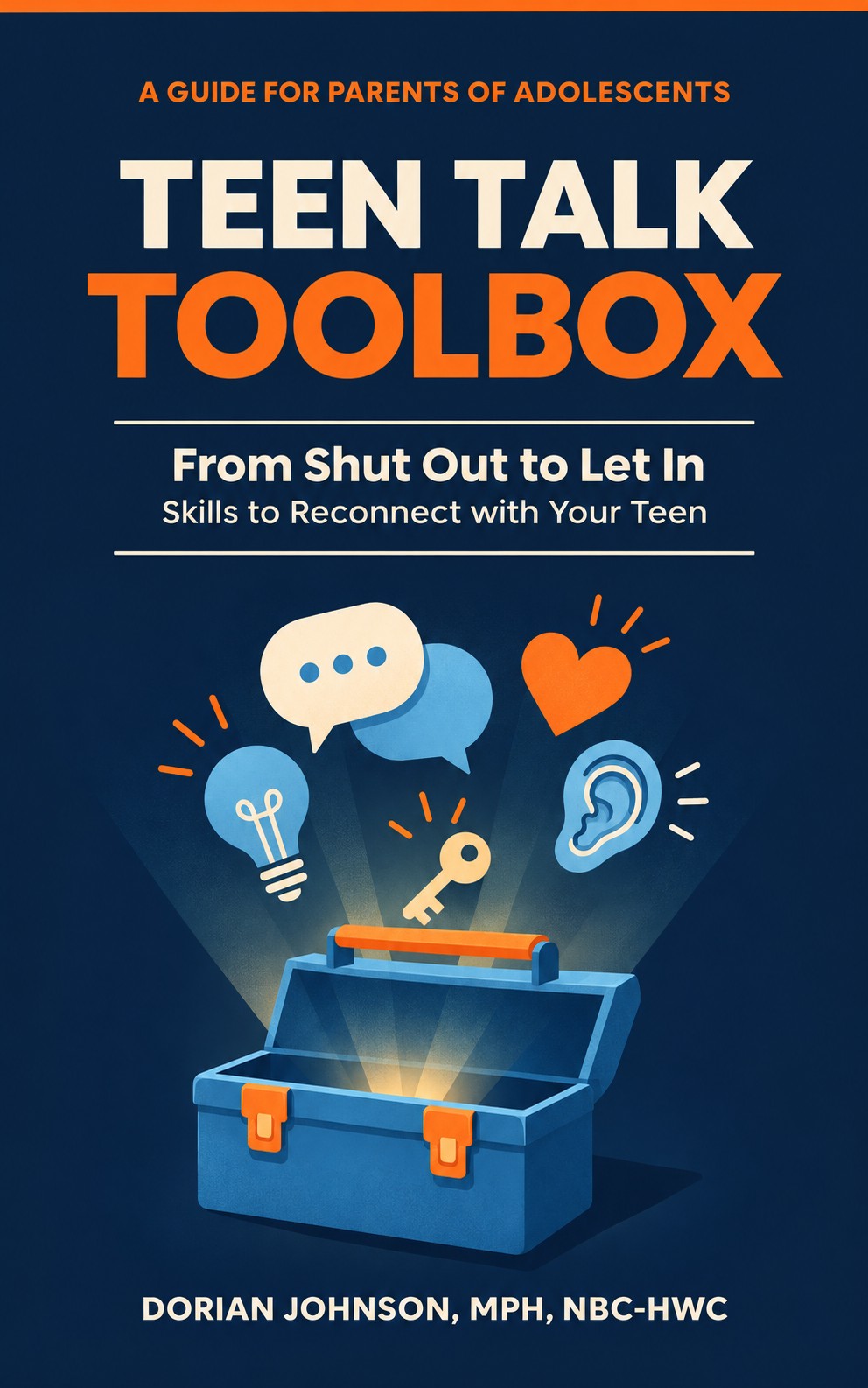
Teen Talk Toolbox book cover: From Shut Out to Let In, Skills to Reconnect with Your Teen, by Dorian Johnson, MPH, NBC-HWC

Does this sound like your house?

Same roof. Different worlds.

You love your teen. Lately, it feels like you're on the outside of their life looking in.

One-word answers

"Fine."

The whole report on a seven-hour school day.

The closed door

"Can you knock?"

Their room became their whole world, and you're on the other side of it.

The dreaded word

"Whatever."

You hear it and instantly feel dismissed, maybe even pissed off. A guaranteed conversation killer.

The shutdown

"You wouldn't get it."

Four words that land like a slammed door.

Same fight

"Here we go again."

It starts as a question. It ends as an argument. Every time.

The quiet car

"So… anything new?"

Twenty minutes to practice, and the only sound is the radio.

What you actually want

"I want my kid to let me in."

You want them to talk with you. To share what's going on. To include you in their world and open up without you having to pry.

Nobody can promise that last part.

But, you can build the conditions that make it a whole lot more likely, one conversation at a time.

Why this works

Skills you practice. Built on Motivational Interviewing.

Most parenting advice hands you a script and wishes you luck. Then your kid goes off script in the first five seconds.

Teen Talk Toolbox teaches the skills underneath the words, so you can find your own. These moves come from Motivational Interviewing, the communication method counselors, doctors, and health coaches use to help people open up and own their choices. I adapted it for the kitchen table, where you still hold the car keys and the curfew.

Here's what hits different. Every chapter ends with one rep to try that week, plus a smaller version for hectic weeks and a stretch version when you're ready. The skills leave the page and show up where talks actually happen: at dinner, in the car, at 9:30 on a school night.

Tuned by age

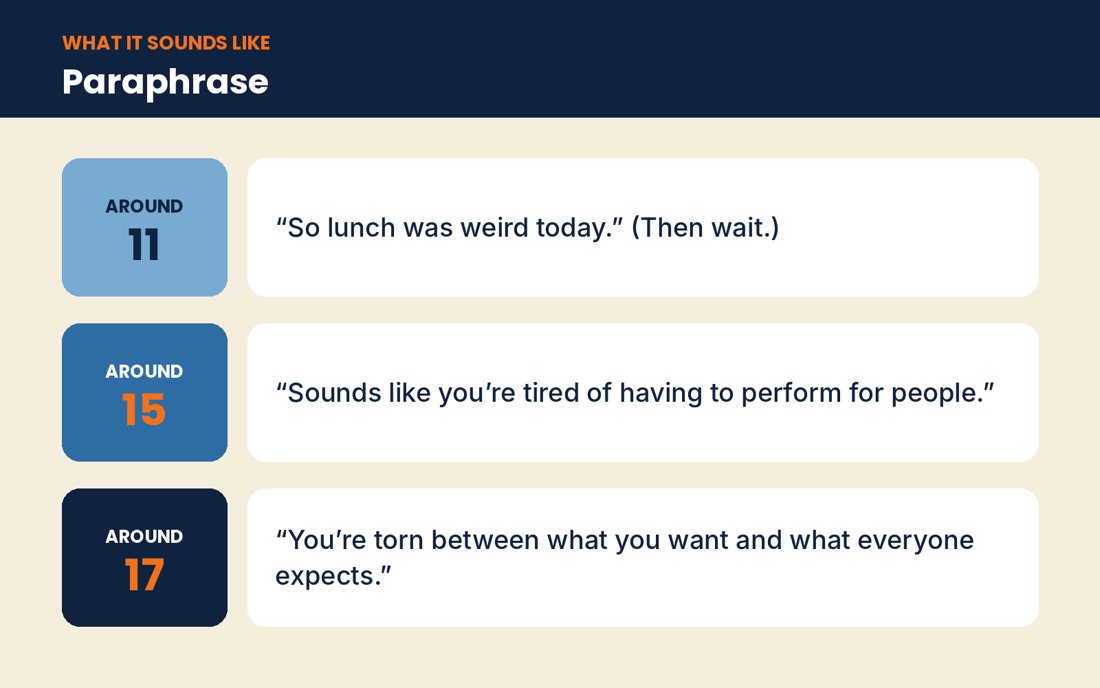
Hear it at 11, 15, and 17

Every skill shows how it sounds for a middle schooler, a high schooler, and an almost-adult. Then you say it your way.

Practice built in

Real scenarios, real choices

Everyday moments with answers that all sound reasonable. Picking the best one builds the judgment you need in the moment.

Grounded in research

Every chapter has receipts

Adolescent development, positive youth development, and MI in plain language, with every source listed in the back.
The shift

From shut out to let in.

Before
  • Guessing what's wrong
  • Lecturing
  • The same fight on repeat
  • One-word answers
  • Feeling shut out
After
  • Asking and really listening
  • Reflecting back
  • Getting to what it's really about
  • Real conversations
  • Feeling let back in

Your plan

Three steps. One skill a week.

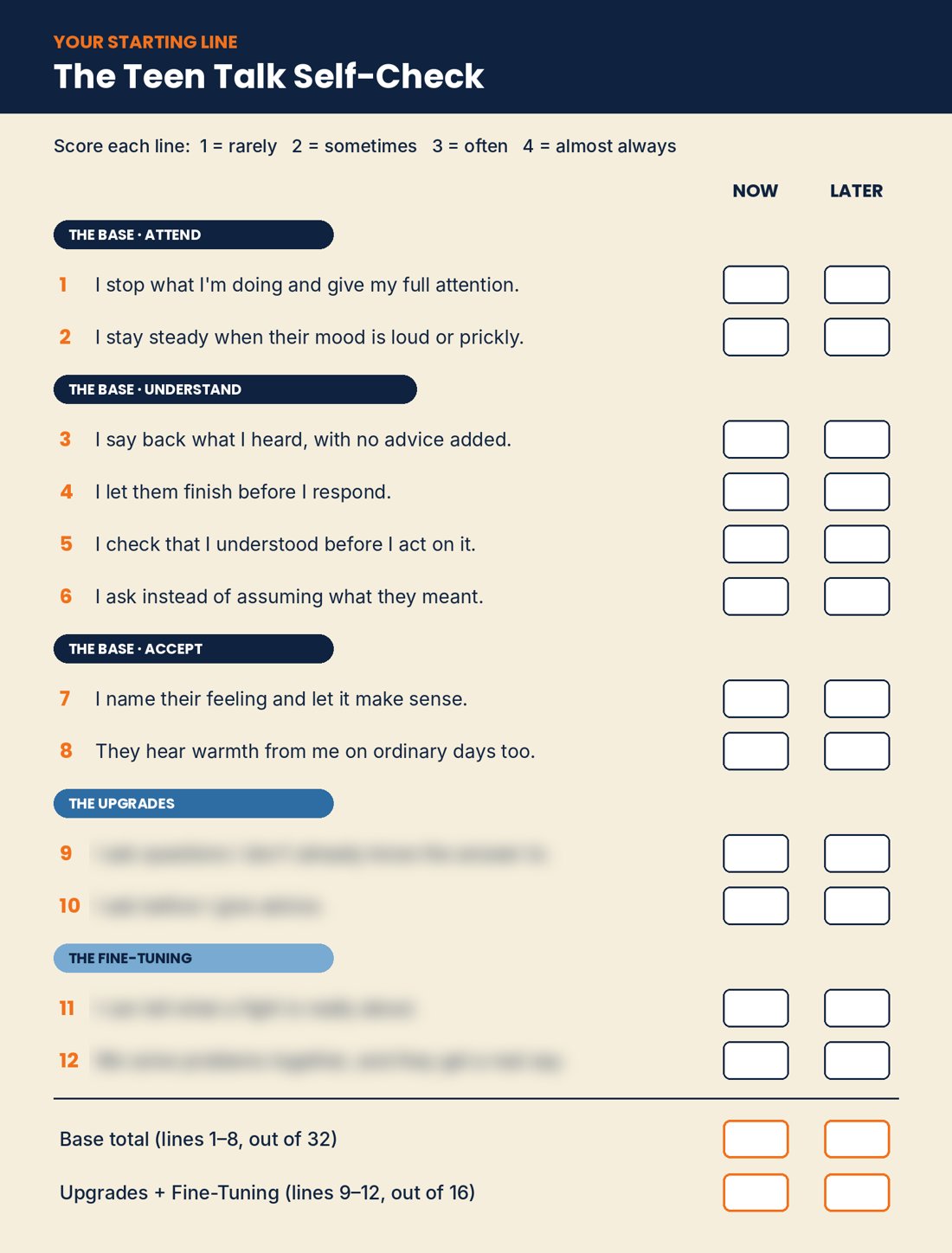
  1. Find your starting line

    A five-minute self-assessment shows what's already working and where your first rep should go.

  2. Practice one move a week

    Short chapters, one skill at a time, with a rep sized to fit your real life.

  3. Notice the door open

    More words. Longer talks. And, every so often, "Can I tell you something?"

What's inside

A peek in the toolbox

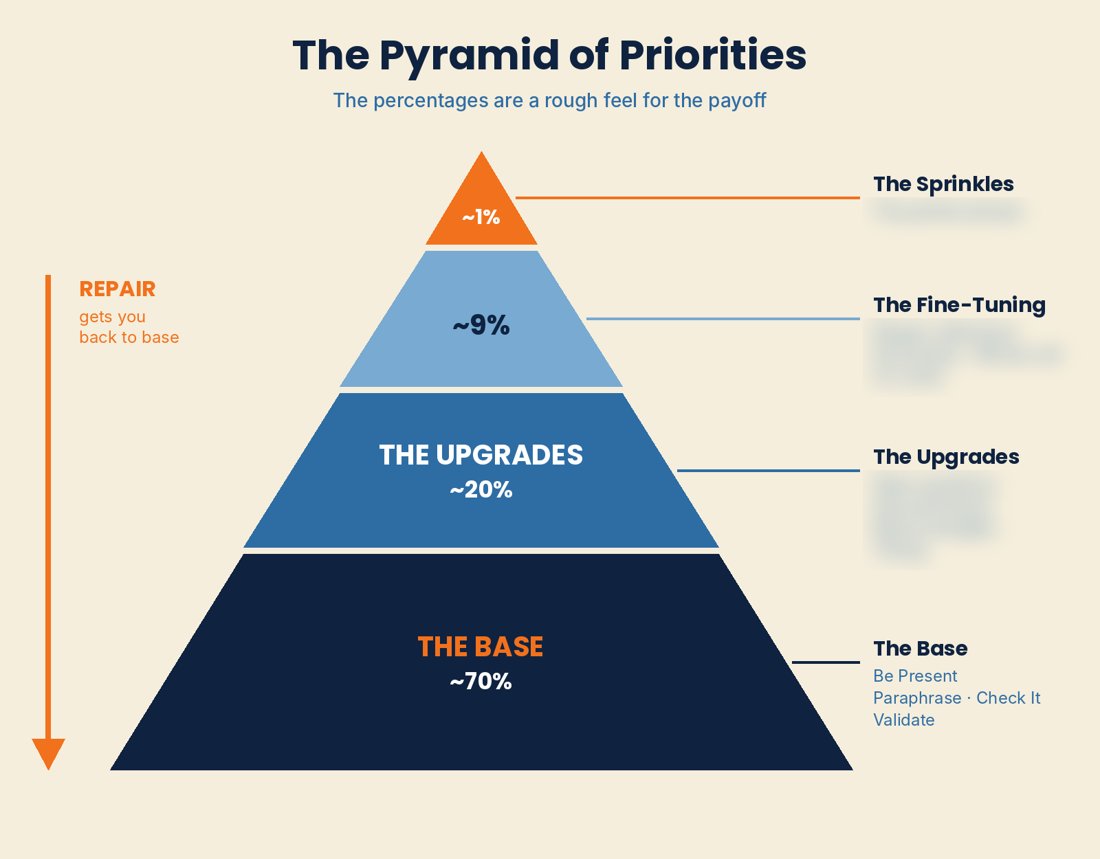
  • The Pyramid of Priorities. Which moves matter most, so you can stop trying to do everything at once.
  • Four base moves. Be Present, Paraphrase, Check It, and Validate: the basics, done well, often.
  • The power tools. Four upgrades, including the one that turns a lecture into an offer.
  • The fine-tuning. The move that ends the fight you keep having, and a fair way to decide who makes which calls.
  • Repair. How to come back after you snap, plus what to do when it's bigger than a talk.
  • What grows in your kid. The 5 Cs of positive youth development.
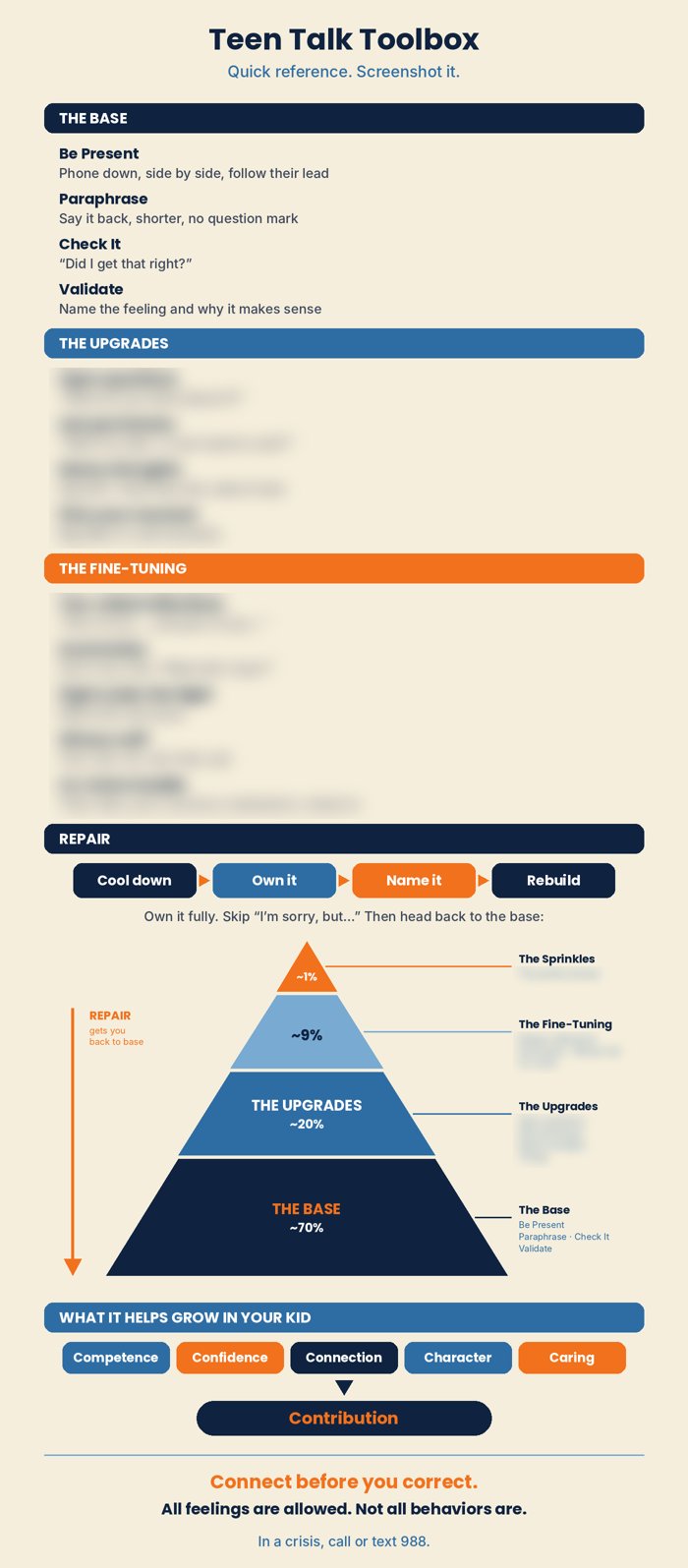
  • A quick-reference card. Every tool on one screen, for your phone.
The Pyramid of Priorities. The base is shown: Be Present, Paraphrase, Check It, Validate. The upgrades, fine-tuning, and sprinkles are blurred.
The Teen Talk Self-Check, with the upgrade and fine-tuning lines blurred
The five-minute self-check
How paraphrasing sounds at 11, 15, and 17
How each skill sounds at 11, 15, and 17
The quick-reference card, with the upgrades and fine-tuning blurred
The quick-reference card

The blurry parts are waiting inside the book.

Dorian Johnson, smiling, in a black sweater

Meet your guide

Hey, I'm Dorian. Most folks call me The PHuncle.

Think of me as the uncle at the cookout who happens to know the research, and won't make you sit through a lecture to get it.

I'm a public health educator and coach who works with teens and families in real communities. I hear what teens wish the adults in their lives understood. I also hear from parents who've "tried everything." Most of them were never taught these skills. That's a gap, and gaps can close.

  • MPH, Master of Public Health
  • NBC-HWC, Board-Certified Health & Wellness Coach
Teen Talk Toolbox cover

Get the toolbox

Teen Talk Toolbox

  • 16 short chapters, from first move to full conversation
  • A self-assessment to take now and retake at the end
  • 21 real-life scenarios across three ages
  • One rep a week, with smaller and stretch versions
  • The quick-reference card and the 5 Cs framework

$27

Get the Toolbox for $27

Digital ebook. All sales are final.

Good questions

Before you grab it

Who is this for?

Parents and caregivers of kids ages 10 to 18. Co-parents, grandparents, and the aunts and uncles who end up as the "safe adult" will get plenty out of it too.

My teen barely talks to me. Will this still help?

That's exactly who it's for. The first moves don't ask anything of your kid. They change how you show up, which changes what feels safe to say. Expect a lag, since teens often wait to see if something new will stick. Keep showing up.

How long does it take?

About an hour to read. The real work happens one skill a week, in the conversations you're already having.

Is it a bunch of scripts?

No scripts to memorize. You'll see how each skill sounds at 11, 15, and 17, as a starting point. Then you say it your way, because your kid knows how you talk.

Is this therapy or counseling?

It's education from a public health educator and board-certified health coach. The book also covers when a moment is bigger than a talk and points you to real help, like the 988 Suicide & Crisis Lifeline.

Ready when you are

Get let back in.

One skill a week. A few minutes at a time. The talks you've been hoping for start with the next one you have.

Get the Toolbox for $27